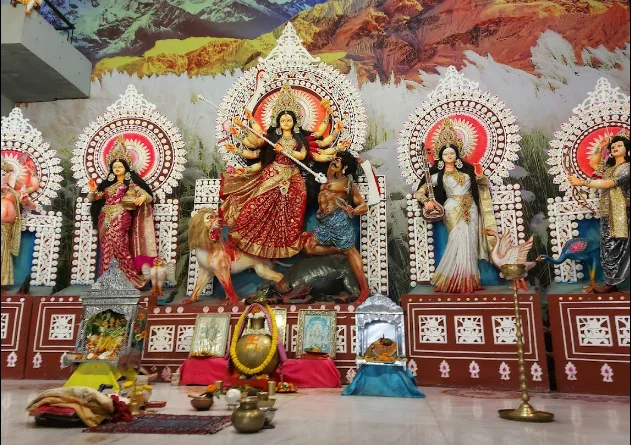
Old Dhaka — Puran Dhaka — is a layered palimpsest of empires. Sena Hindu kingdoms, the Sultanate of Bengal, the Mughal subah, the Bengal Nawabs, the British Raj, East Bengal, East Pakistan, and finally the sovereign nation of Bangladesh — all have left their fingerprints on its lanes.
Within this density stands Dhakeshwari Temple — the most enduring Hindu sanctuary of the city, surrounded by Mughal mosques, Armenian churches, Buddhist viharas, and the merchant havelis of Shankhari Bazaar. The temple is, in this sense, a textbook of South Asian pluralism written in stone, terracotta, and lamp-light.
To wander from Lalbagh Fort to the Buriganga riverfront is to walk past every faith that has ever made Dhaka home — and Dhakeshwari is the threshold at the centre of that walk.
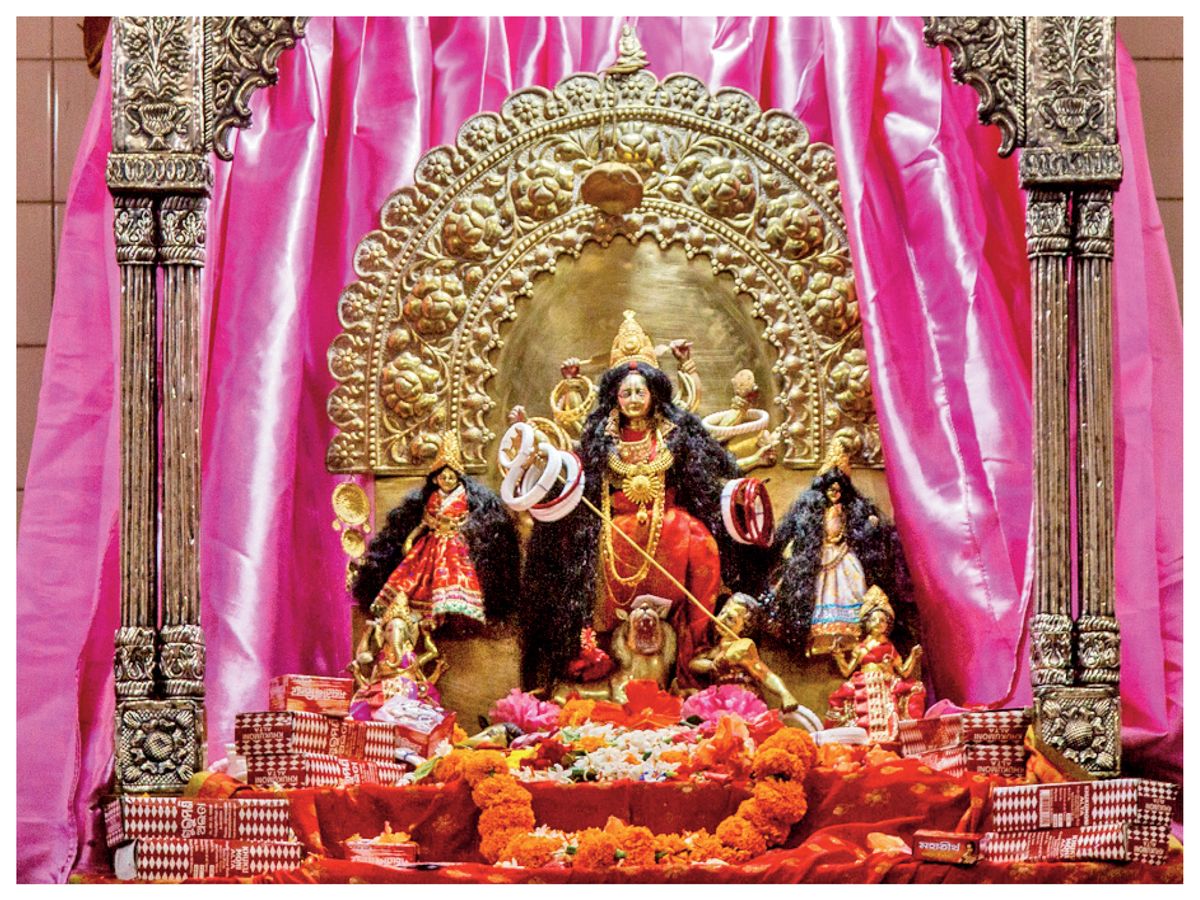
From the Sena dynasty to the modern Republic — eight centuries traced through the temple's stones.
Tradition records the original sanctum being raised by Sena king Ballal Sen, who is said to have rediscovered the lost idol of the Goddess in a forested grove.
Through the Sultanate of Bengal the temple endures, sustained by local communities; mentions appear in medieval Bengali devotional literature.
The Mughal subah of Bengal centres on Dhaka. The temple becomes part of the city's patchwork of sanctuaries, mosques, and merchant quarters.
Major restoration and expansion under successive patrons — the Bengali Renaissance lifts cultural pride; Dhakeshwari becomes a centre of community gathering.
The Partition of Bengal places the temple within East Pakistan. It becomes a symbol of Hindu continuity in a redrawn political landscape.
The temple endures the trauma of war. With the birth of independent Bangladesh, it re-emerges as a treasured national heritage site.
The Government of the People's Republic of Bangladesh formally elevates the temple to the unprecedented status of National Temple.
Dhakeshwari stands as a global emblem of plural civilisational memory — host of State-attended Durga Puja, magnet for international heritage diplomacy, and centre of ongoing restoration.
Through partition, war, migration and modernity — the temple has been reshaped, never extinguished.
Through the medieval Sultanate, the temple was sustained by a Hindu mercantile and devotional community embedded in the polyphonic life of Bengal.
In the 19th century, Dhakeshwari became a cultural meeting point of the Bengali Renaissance — its courtyards alive with literature, music, and reform.
The trauma of 1947 and 1971 redrew populations and boundaries; the temple's resilience became a quiet, defining act of Bangladeshi pluralism.
For Bangladesh's Hindu minority, the temple is more than a place of worship — it is the visible constitutional dignity of plural belonging.
Successive restorations — by communities, trusts and the State — have preserved original proportions, terracotta motifs, and shikhara forms.
Today the temple appears in school textbooks, tourism campaigns, and cultural diplomacy — a visual shorthand for Bangladesh's plural soul.
The story of Dhakeshwari is not the story of one community alone. It is the story of how a nation — born in 1971 with the bloodied hope of equal citizenship — chose to enshrine a Hindu temple as its National sanctuary.
That single decision, taken in 1996, broadcasts a constitutional truth: Bangladesh is the nation of all who call it home. The Goddess of Dhaka is the Goddess of every citizen of Dhaka.
"A temple in a Muslim-majority republic, declared the National Temple. There is no equivalent declaration anywhere else in the world."
This is the heritage we steward — and the heritage we share with every visitor who enters the precinct.
Architecture, ritual, and devotion — captured in the gallery.
Open Gallery